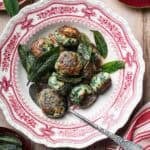
Spinach Ricotta Gnudi With Brown Butter And Sage
Light as clouds and impossibly tender, Gnudi are what happens when spinach and ricotta skip the pasta and go straight for the good part. These soft dumplings get a quick simmer, then a toss in nutty brown butter with crispy sage: burro e salvia, the Italian answer to doing less, but better.
Servings: 4
Calories: 281kcal
Ingredients
- 14 ounces fresh spinach (washed and spun)
- 2 tablespoons extra-virgin olive oil
- 1 clove garlic (grated)
- 1 cup whole milk ricotta
- 1 free-range egg
- 1 cup Parmigiano Reggiano (or Pecorino or vegetarian-grade Parmesan - grated with a Microplane zester)
- ⅓ cup all-purpose flour
- 1 teaspoon kosher salt
- ¼ teaspoon black pepper
- 1 tablespoon unsalted butter
For the brown butter and sage
- 2 tablespoons unsalted butter
- 16 large fresh sage leaves
Instructions
- Drain the ricotta – Place the ricotta in a fine mesh strainer over a bowl and let it drain for 30 minutes to remove excess moisture.
- Cook the spinach – Heat 1 tablespoon of olive oil in a large sauté pan over medium heat. Add half the garlic and half the spinach and cook until wilted. Repeat with the remaining spinach and garlic.
- Squeeze and chop the spinach – Transfer the cooked spinach to a clean kitchen towel and wring out as much moisture as possible. Finely chop on a cutting board.
- Make the dough – In a large bowl, mix the chopped spinach, drained ricotta, egg, Parmesan, salt, and pepper until smooth. Add flour and stir until combined.
- Shape the gnudi – With floured hands, form 2-inch (5 cm) balls. Lightly coat each in flour, roll gently between your palms, and place on a floured tray or plate.
- Cook the gnudi – Bring a large pot of salted water to a gentle boil. Simmer the gnudi in two batches until they float to the surface, about 3-4 minutes. Remove with a slotted spoon and set aside on a tray.
- Pan-fry the gnudi – In a large pan, melt ½ tablespoon of butter over medium-high heat. Add the gnudi and sauté until golden on both sides, about 2 minutes per side.
- Make the brown butter and sage – In a small pan, melt the butter until it turns lightly golden and fragrant. Add the sage leaves and fry until crisp.
- Serve – Divide gnudi between plates or shallow bowls. Spoon over brown butter and crispy sage. Serve immediately.
Notes
- Drain the ricotta well – Ricotta holds more moisture than you’d think. Letting it drain before mixing helps the dough hold together and keeps the texture light, not soggy.
- Grate your own cheese – Pre-grated Parmigiano often includes anti-caking agents that interfere with both texture and flavor. Freshly grated cheese (ideally with a Microplane or the fine side of a box grater) melts more evenly and gives a better finish.
- Squeeze the spinach thoroughly – Remove as much liquid as possible from the cooked spinach. Excess moisture will loosen the dough and can cause the gundi to fall apart while cooking.
- Note on coating flour – This recipe uses all-purpose flour for the coating: it’s pantry-friendly and works well. But if you have semolina on hand, use it. It’s a classic Italian touch that adds a slightly firmer exterior.
- Cook right after shaping – Once shaped and coated, gnudi should go straight into simmering water. Letting them rest too long allows moisture to soak into the flour, making them heavy, sticky, and harder to handle.
- Don’t overcrowd the gnudi – Whether boiling or pan-frying, give them space so they cook evenly and hold their shape. Too many in the pot or pan at once can lead to sticking, uneven cooking, and less browning.
- Keep an eye on the sage – The sage fries quickly, so stay close. As soon as the leaves turn lightly golden and crispy, remove the pan from the heat to prevent burning. Serve right away.
Nutrition
Calories: 281kcal | Carbohydrates: 10g | Protein: 14g | Fat: 21g | Saturated Fat: 11g | Polyunsaturated Fat: 1g | Monounsaturated Fat: 8g | Trans Fat: 0.2g | Cholesterol: 75mg | Sodium: 753mg | Potassium: 451mg | Fiber: 2g | Sugar: 1g | Vitamin A: 6732IU | Vitamin C: 19mg | Calcium: 357mg | Iron: 3mg